
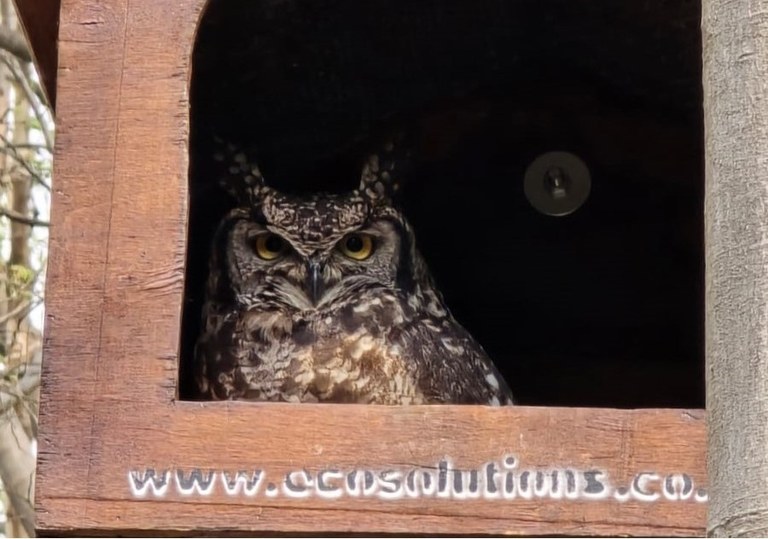
Plastic vs Wooden Owl Boxes
South African vs European Climate Context
Artificial nesting and roosting structures such as owl boxes and bat houses are widely used to mitigate the loss of natural cavities. However, material choice critically determines internal microclimate and biological suitability, and this choice cannot be separated from regional climate.
In temperate European climates, average summer daytime temperatures typically range between 18–25 °C, with lower solar intensity and fewer extreme heat events. Under these conditions, artificial boxes may exceed ambient air temperature but often remain within tolerable physiological limits, particularly when shaded or ventilated.
In contrast, South African conditions are fundamentally different. Much of the country regularly experiences:
Summer daytime air temperatures of 30–40 °C
Very high solar radiation and UV exposure
Prolonged heatwaves with limited nocturnal cooling
Research shows that artificial nest boxes can exceed ambient air temperature by 10–20 °C under direct sun exposure. In South African conditions, this means internal box temperatures can readily reach or exceed 45–60 °C, particularly in materials with poor thermal buffering such as plastic.
For context:
Heat stress in birds is commonly observed above 40–42 °C
Avian egg viability declines sharply above 40 °C
Bat pup mortality and roost abandonment increase markedly above 38–40 °C
Sustained exposure above 45 °C poses a serious risk of fatal hyperthermia
Wood is environmentally suitable not because it is traditional, but because it is thermally functional. Wooden boxes provide slower heat gain, lower peak internal temperatures, gradual nocturnal cooling, and limited breathability that more closely mimics natural tree hollows.
Plastic solves maintenance problems, not ecological ones. While plastic boxes may offer superior structural durability and ease of cleaning, they are biologically inferior in hot, high-insolation environments unless heavily engineered with insulation, ventilation, and strict placement controls.
Conservation caveat
In the South African context, poorly designed or poorly placed plastic owl boxes and bat houses may function as ecological traps rather than conservation tools. By attracting animals into structures that expose them to lethal or sub-lethal thermal stress, such boxes can:
Increase mortality risk
Reduce breeding success
Promote roost or nest abandonment
Undermine conservation outcomes while appearing superficially beneficial
Under these conditions, plastic boxes can be anti-conservation in effect, even if pro-conservation in intention.
For owl boxes and bat houses in South Africa:
Plastic increases heat risk
Plastic reduces biological comfort
Plastic introduces ethical compromises
If the goal is real conservation, real occupancy, and defensible science, plastic should not be the default material.
Longevity without habitability is meaningless.
References
Griffiths, S.R., Rowland, J.A., Briscoe, N.J., Lentini, P.E. & Handasyde, K.A., 2017. Comparison of thermal properties of nest boxes and tree hollows for wildlife conservation. Biological Conservation, 209, pp. 341–348.
Rowland, J.A., Briscoe, N.J. & Handasyde, K.A., 2017. Comparing the thermal suitability of nest boxes and tree hollows for conservation management. Wildlife Research, 44(7), pp. 569–579.
Maziarz, M., Broughton, R.K. & Wesołowski, T., 2017. Microclimate in tree cavities and nest boxes: implications for hole-nesting birds. Forest Ecology and Management, 405, pp. 306–313.
Rueegger, N., 2017. Artificial nest boxes and their potential for ecological traps. Ecological Management & Restoration, 18(1), pp. 21–29.
Speakman, J.R. & Thomas, D.W., 2003. Physiological ecology and energetics of bats. In: Kunz, T.H. & Fenton, M.B. (eds.), Bat Ecology. Chicago: University of Chicago Press, pp. 430–492.Kind Regards,